8 Best Free Rule-Based Chatbots in 2026 (Free, Open Source Software)
On this page

Most people think they need artificial intelligence to put a chatbot on their site. They don't.
For questions like where's my order, booking a demo, or pointing someone toward the right help article, a rule-based chatbot does the job better and it’s hundreds of times cheaper than AI chatbots or free in most cases.
Below, you'll find 8 free rule-based chatbots worth considering in 2026.
What Is a Rule-Based Chatbot?
A rule-based chatbot follows a script. You build a decision tree of if-then logic, keyword triggers, and button menus, and the bot walks the visitor down whichever branch matches their input.
If a visitor asks a question that is outside the script, the bot offers a fallback response or hands the conversation over to a human.
You can think of it as a smarter version of a phone menu on your website. Instead of pressing numbers and waiting on hold, visitors tap an option and get an answer or a next step immediately.
This is what sets it apart from an AI chatbot. AI-based bots use natural language processing to interpret free-form messages and generate responses dynamically.
That flexibility is useful, but it also makes the system harder to control and more expensive to run.
Explore: 8 Best AI Chatbot Builders in 2026 (Free, No-Code & Paid)
What to Look for in Rule-Based Chatbots
Before you start signing up for free trials, it helps to know what separates a tool you'll still be using next year from one you'll abandon in a week.
Here's what actually matters when you're comparing free rule-based chatbots:
- Visual builder: If you don't write software, you need drag-and-drop. Chatbots that let you build flows by connecting blocks on a canvas.
- Where your customers actually are: A website widget is useful, but if your customers are active on Instagram or WhatsApp, choose a tool that supports those channels well.
- Integrations: A bot becomes much more useful when it connects to your CRM, email platform, calendar, or eCommerce stack.
- Free-plan limits: This is where many users get disappointed. Check whether the cap is based on chats, contacts, conversations, or responses.
- Human handoff: A good bot should know when to stop. If the script ends, it should be able to route the visitor to a real person or open a ticket.
- Self-service deflection: The best support bots point people to useful documentation.
- Data and hosting: If compliance matters, self-hosted open source software can be a major advantage because your data stays under your control.
- Project health: For open source tools, check the GitHub page. When was the last release? Are issues getting answered? A project that went quiet two years ago can still work, but you're on your own when something breaks.
While this checklist seems daunting, we made sure each listed rule based chatbot below is worth your time, and could be the best choice for your needs.
Different Types of Chatbots
"Rule-based" is one slice of a bigger pie, and knowing where it sits helps you understand what these tools can and can't do.
Most chatbots fall into one of these buckets:
1. Menu and button-based bots
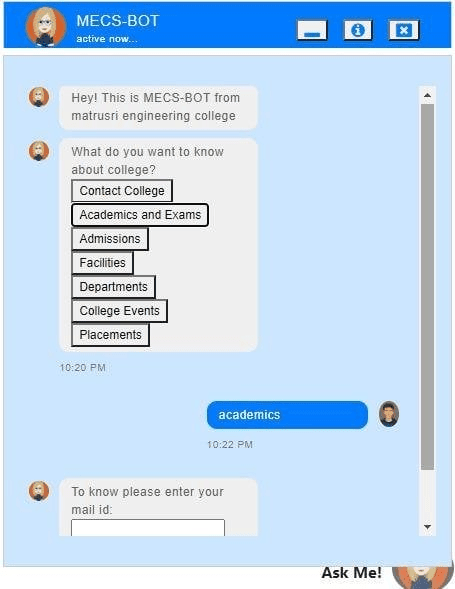
Menu and button-based bots are the simplest of all.
Visitors tap predefined buttons to navigate a tree, with no free text involved.
They're perfect for guiding someone to an FAQ answer and useless the moment a customer types a question you didn't anticipate.
2. Rule-based and keyword-recognition bots
Rule-based bots add a layer of intelligence by scanning for trigger words.
For example, you could program a bot to recognize keywords such as "refund," "pricing," or "order," and then display relevant options.
These bots are like interactive FAQs. They are cheap, fast, predictable, and easy to break with unexpected phrasing.
3. AI and NLP bots
AI and NLP bots use machine learning to understand intent, even when people phrase things oddly.
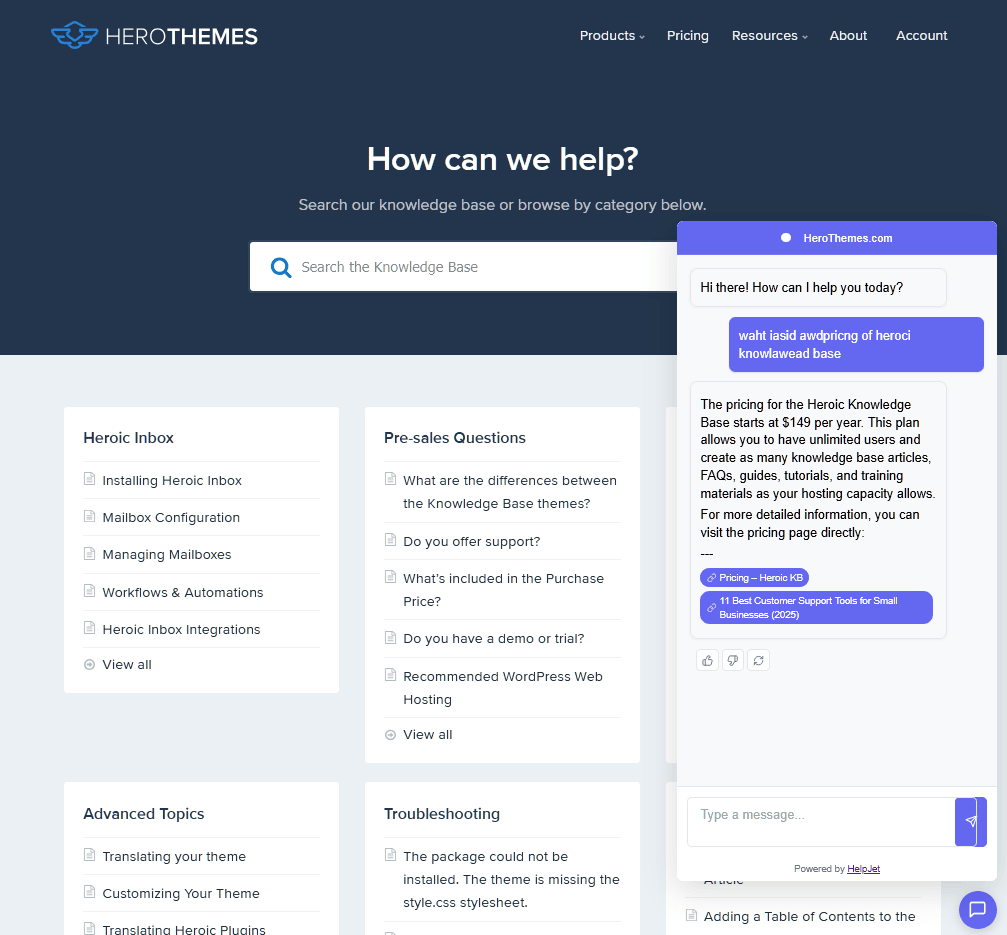
They handle ambiguity far better, but they need training data, ongoing tuning, and a budget for the underlying models.
4. Hybrid bots
Hybrid bots blend rules with AI, and this is where most modern tools are heading.
The rule-based bots handle the predictable stuff, while AI catches the curveballs.
5. Contextual bots
Contextual bots remember earlier parts of a conversation, or even past sessions, so they don't ask you the same question twice.
6. Voice-enabled bots
These bots add speech on top, which is where tools like Dialogflow earn their keep.
Now, onto the tools.
The Best Free Rule-Based Chatbots in 2026
1. Botpress
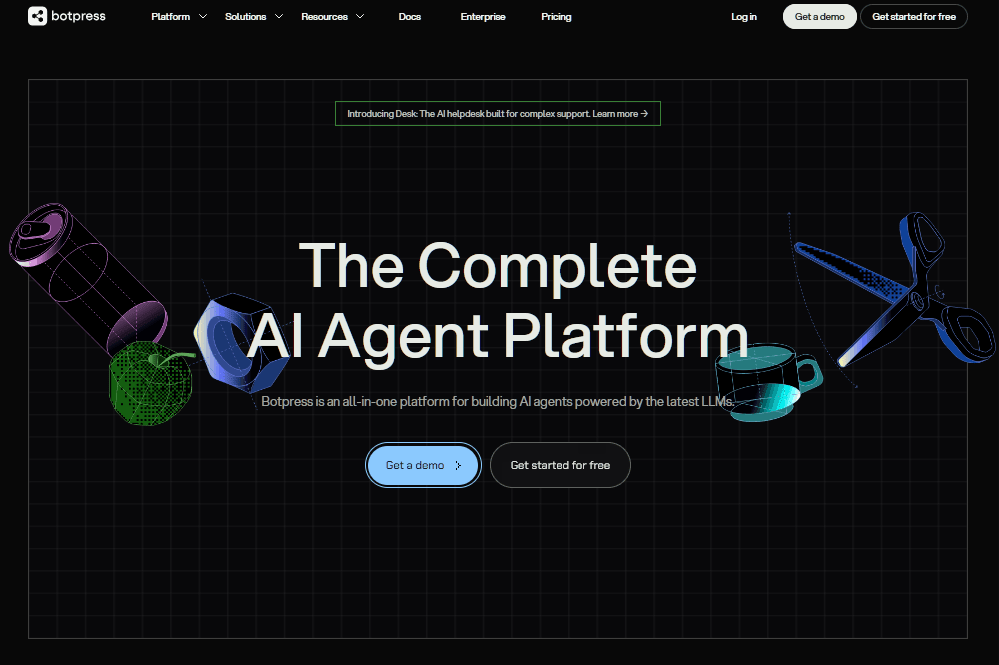
Botpress is probably the first name that comes up when developers talk about open source chatbots, and for good reason.
It pairs a visual, drag-and-drop flow builder with built-in natural language understanding. Which lets a non-developer to map out the conversation while a developer extends it with custom code.
Botpress sits right at the boundary between "no-code tool" and "developer framework," and that's its charm.
Key features of Botpress:
- A real visual builder: You construct flows, intents, and entities by dragging blocks, then layer on conditions and slot-filling to collect information step by step.
- Pure rules or hybrid, your call: You can build a 100% scripted bot that never touches AI, or drop in LLM blocks where you want them.
- An integration hub: Connect to messaging channels, your own APIs, and third-party services without reinventing the wheel.
- Self-hosting with full control: Run it on your own infrastructure if data ownership matters to you.
Limitations:
- Self-hosting takes real setup work
- The cloud product has become the company’s main focus
Pricing
Botpress cloud version offers a free Pay-as-you-go plan that includes the visual Studio, a small monthly AI credit, and access to the integration hub.
The lowest paid tier, Plus, runs $150 per month.
Botpress is the closest thing to a polished SaaS experience you'll find in an open source package. If you want drag-and-drop ease and the freedom to self-host, it's the one I'd reach for first, as long as you've got someone who can handle the server setup.
2. Collect.chat
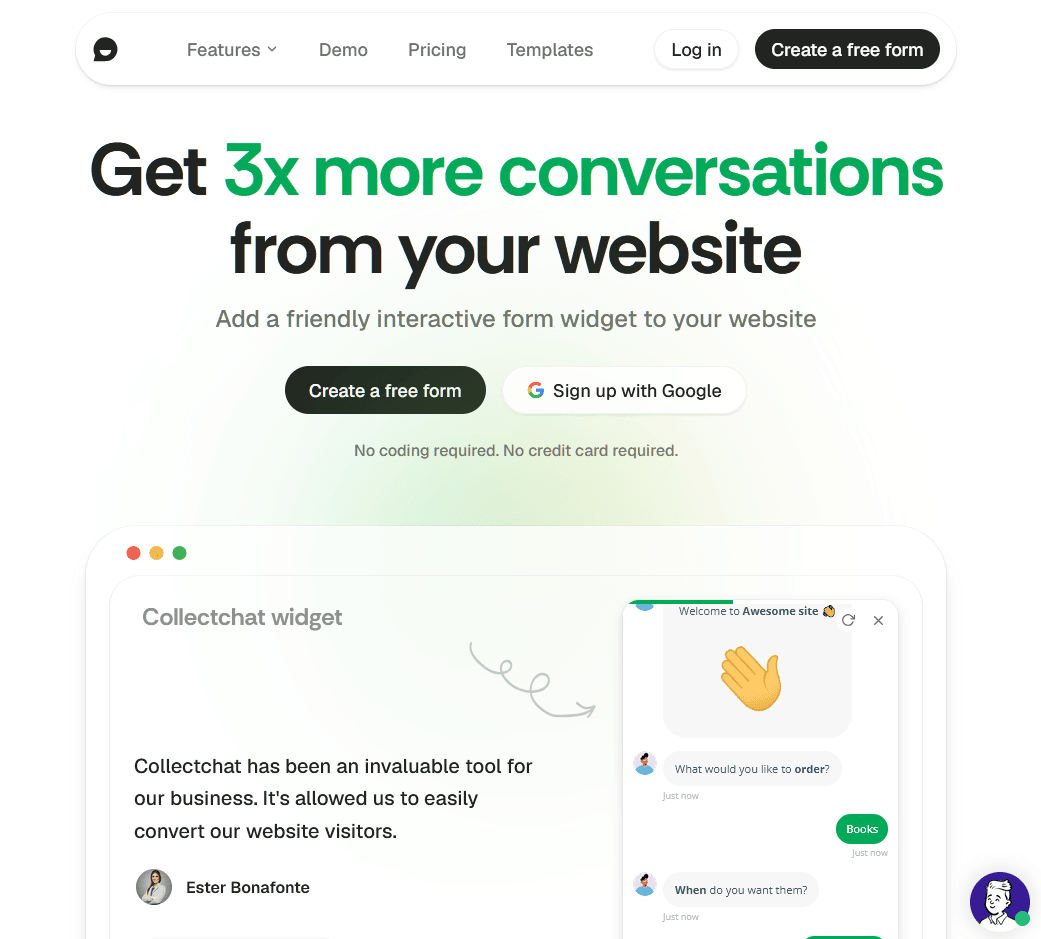
Collect.chat keeps things deliberately simple. It is designed for scripted lead capture, surveys, and feedback flows. And it is especially friendly for site owners who want something quick and predictable.
You build drag-and-drop flows with conditional branching, and that's it.
No NLU, no LLM, no training data, just a clean scripted conversation that does exactly what you set up.
For any site owner that wants a clean, rule-based chat widget for lead capture, booking, or surveys, Collect.chat is a smart, low-effort choice.
Key features of Collect.chat:
- Genuinely no-code and quick: Build a working bot in minutes with zero technical setup.
- WordPress-ready: A dedicated plugin gets it onto your site easily.
- Predictable by design: Without AI in the mix, the bot does precisely what you scripted, every time.
Limitations:
- Free tier is tightly capped
- Not suitable for open-ended conversational support
Pricing
Collect.chat Free Forever plan covers 100 monthly responses across unlimited bots.
Paid plans start around $14 per month (billed annually) and climb based on response volume.
3. Rasa
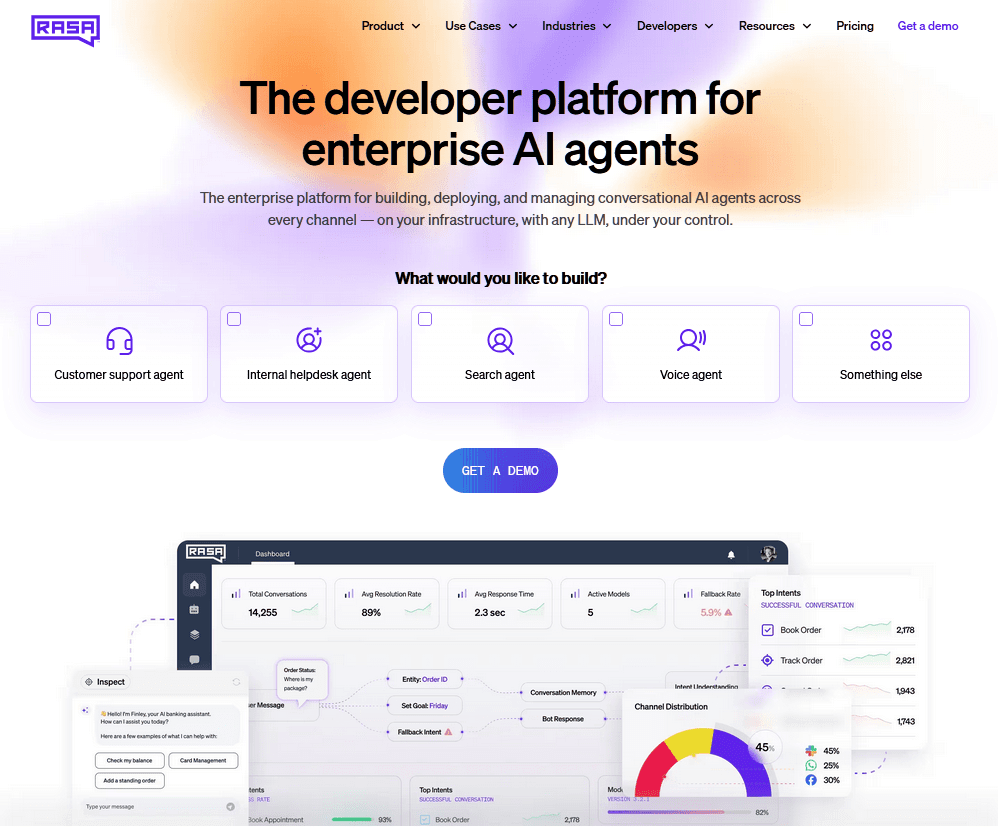
Rasa is a popular open-source chatbot platform that supports both explicit rules and machine-learning-driven dialogue. It is the textbook example of blending rule-based learning with machine learning.
Rasa uses a dedicated rules file for straightforward if-then behavior and then adds "stories" and dialogue policies that learn from example conversations.
With Rasa, you can build something fully scripted, fully ML-driven, or anything in between.
Key features of Rasa:
- Genuine on-prem control: Everything runs on your infrastructure, which is why healthcare, finance, and government teams gravitate to it.
- Serious NLU: The natural language understanding pipeline is among the most capable in open source.
- Rules plus learning: Mix deterministic rules with policies trained on real conversation data.
Limitations:
- Steeper learning curve than most rule based chatbots on this list
Pricing
Rasa Open Source is free under the Apache 2.0 license. There's also a Rasa Pro tier with a free developer license capped at 1,000 conversations per month if you want the commercial extras.
In my opinion, Rasa is overkill for a small business landing page bot. But if you have an AI team developing a specialized assistant where data sovereignty isn't negotiable, few chatbots will give you this much control.
4. HubSpot Chatbot Builder
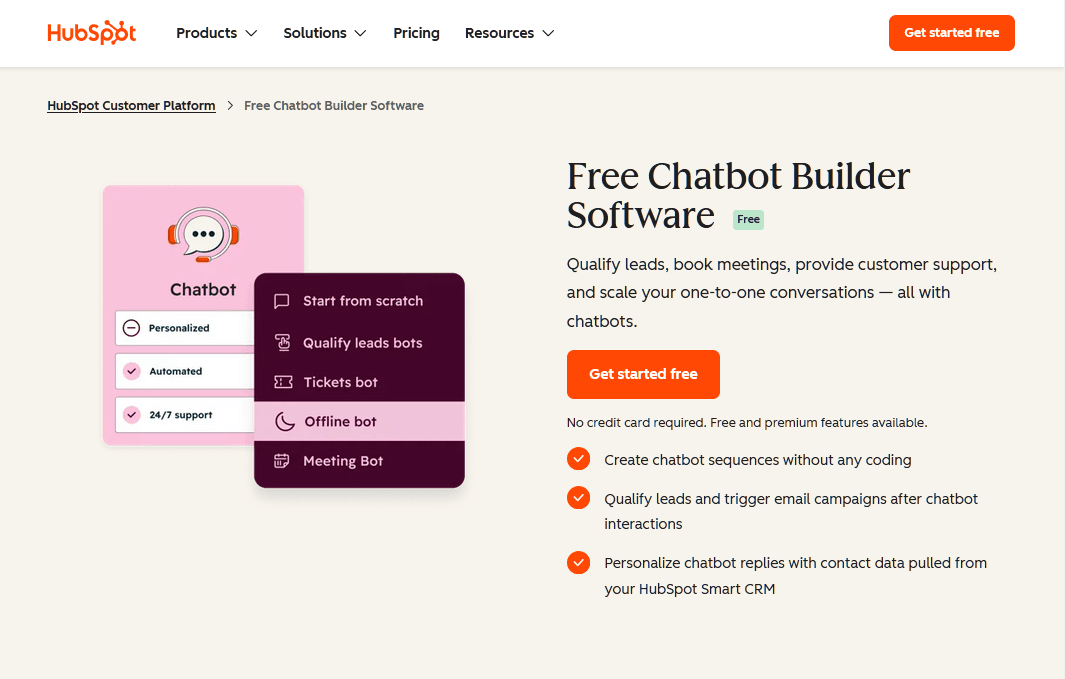
HubSpot’s chatbot builder is appealing because it is tied directly into HubSpot’s free CRM. That makes it especially useful if your main goal is to qualify leads and send them into your sales pipeline.
HubSpot even provides rule-based templates, so there's no ambiguity about what you're getting.
Key features of HubSpot chatbot:
- Free as part of the CRM: No separate subscription to start building.
- Leads flow straight into HubSpot: Bot conversations populate contact records automatically.
- Practical bot actions: Qualify leads, book meetings, and create tickets without leaving the flow.
Limitations:
- Basic free-tier functionality
- Advanced actions sit behind expensive paid plans
- Better for CRM workflows than complex support automation
Pricing
With HubSpot’s free plan, you get lead qualification and data collection, which is sufficient for many sites. Anything more sophisticated requires upgrading to a paid HubSpot plan, which comes at a meaningful cost.
If you already use HubSpot's CRM or plan to, the free chatbot builder is an easy yes for lead-qualification bots.
5. FlowXO
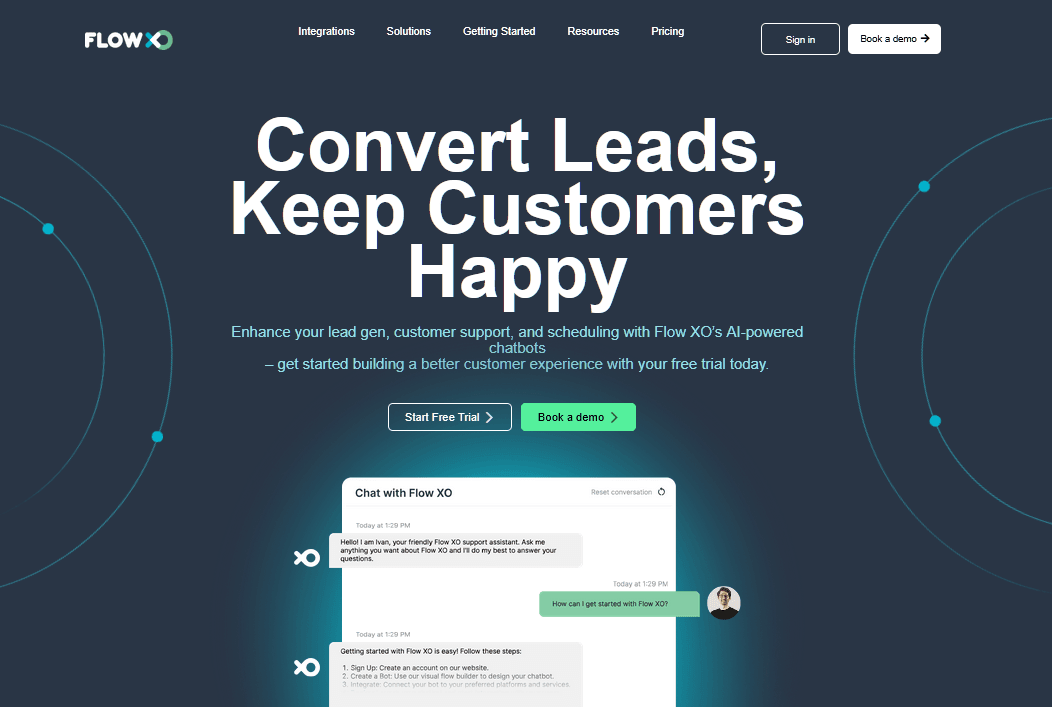
FlowXO is a flexible multi-channel platform that works across web chat and messaging apps.
If you need a rule-based chatbot that operates on multiple platforms and is integrated with your other tools, FlowXO is built for that.
Key features of FlowXO:
- Truly multi-channel: Run bots across web, Telegram, Messenger, and more from one builder.
- Integration-heavy: Over 100 connections let your bot talk to the rest of your stack.
- Flexible flows: Chain together messages, logic, and external actions in one sequence.
Limitations:
- Complex builds can feel patchwork
- Free tier is limited
- Less polished than some newer rule based chatbots
FlowXO free plan includes 5 bots or active flows and 100 interactions per month, with FlowXO branding on your bot. The Standard plan at $25 per month opens up 5,000 interactions, 15 flows, and removes the branding.
6. Typebot
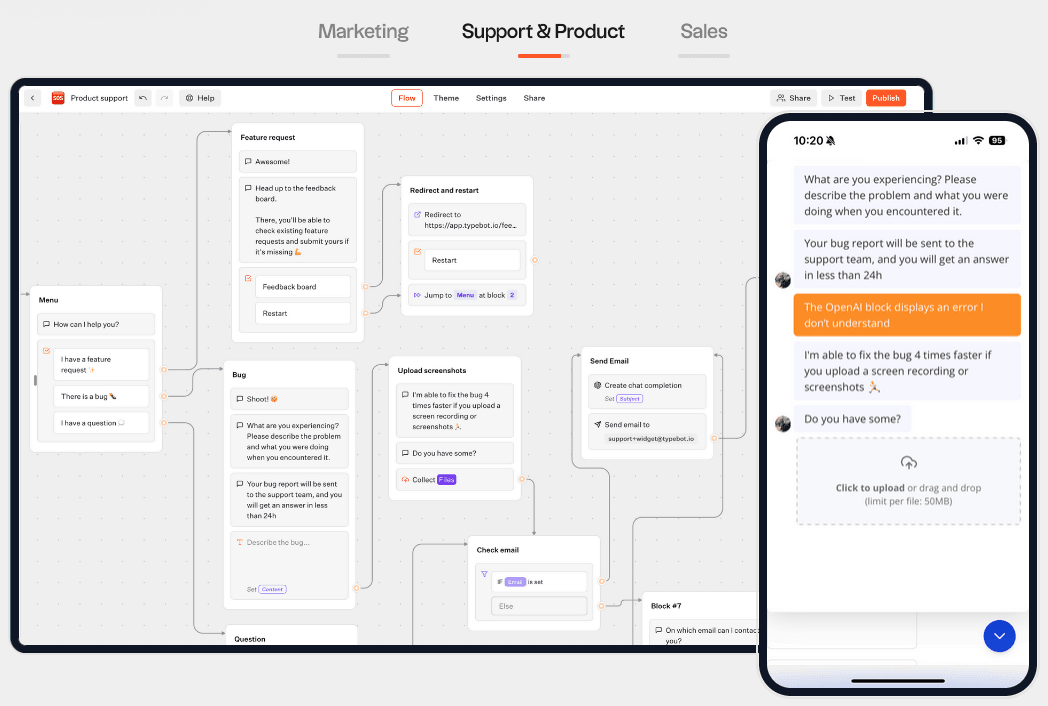
TypeBot takes a narrower, yet highly effective, approach. It focuses on conversational forms, which makes it ideal for lead capture, onboarding, and surveys.
With more than 45 blocks to choose from, including text, buttons, picture choices, date pickers, and even Stripe payment inputs, the Typebot Builder provides a wide range of options. All of these elements are connected on a visual canvas.
Key features of Typebot:
- Genuinely lovely design: The finished bots look way too good.
- Conditional logic and branching: Send people down different paths based on their answers, run A/B tests, and drop in custom JavaScript when you need it.
- Free self-hosting: Host it yourself with Docker and pay only for your own server.
- Optional AI: Bolt on OpenAI if you want generative responses, but you don't have to.
Limitations:
- Not built as a traditional support bot
- Self-hosting still requires technical setup
Pricing
Typebot’s cloud free plan is one of the more generous on this list: unlimited bots, 200 chats per month, native integrations, and webhooks.
Paid plans start at $39 per month for 2,000 chats, with a Pro tier at $89 per month.
Bottom line: If your goal is capturing leads or onboarding users through a slick conversational flow, Typebot is the best in this category For frontline customer support, look at other rule based chatbots in this list.
7. Landbot
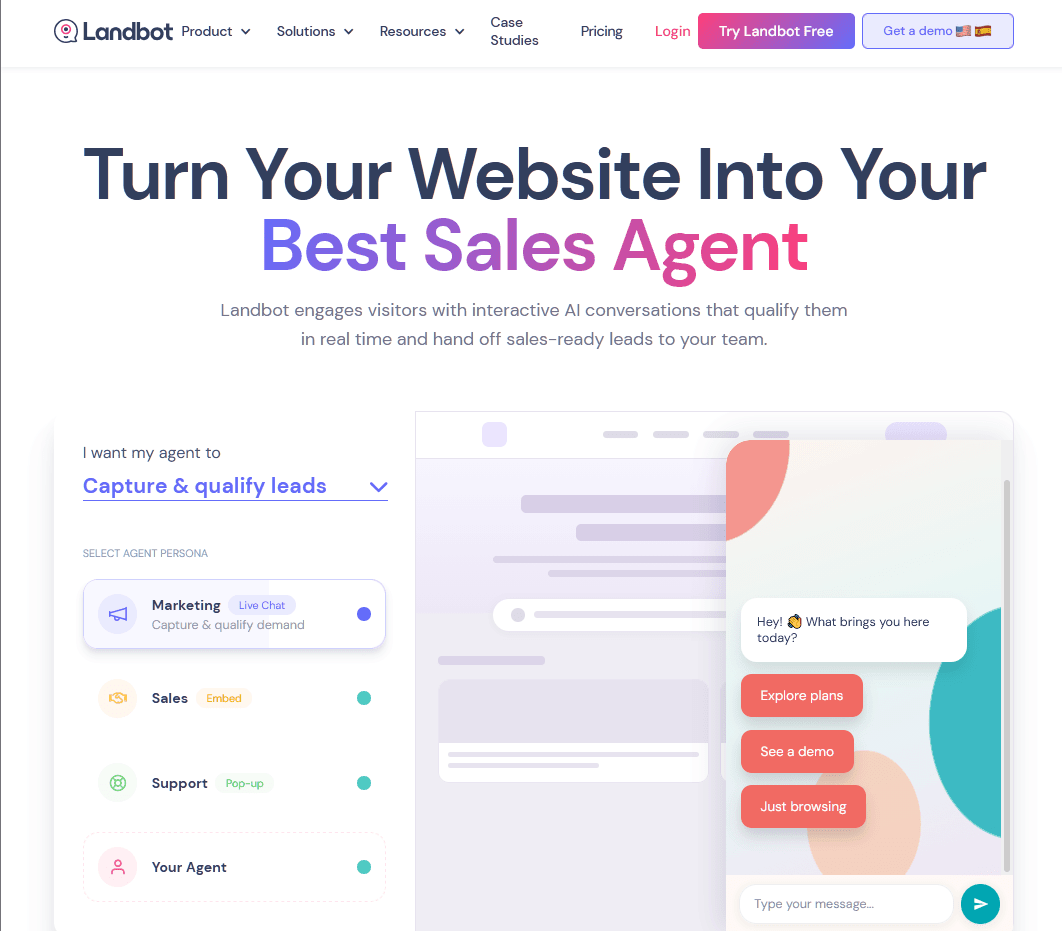
Landbot is designed to make bot-building feel approachable and even enjoyable. It is especially well suited to lead capture and qualification flows, where a clean visual builder can make a big difference.
The drag-and-drop canvas is genuinely fun to use, and you can have a rule-based flow for your website or WhatsApp running in well under an hour.
Key features of Landbot:
- The friendliest builder around
- Web and WhatsApp: Strong support for both website widgets and WhatsApp conversations.
- Conditional logic and variables: Build flows smart enough to personalize the experience based on earlier answers.
Limitations:
- Free tier is mainly for testing
- WhatsApp and AI usage can become expensive
Pricing
Landbot’s free "Sandbox" plan gives you 100 chats per month, a single seat, and the web channel only.
Paid plans start at roughly $40 per month for 500 chats.
8. BotMan
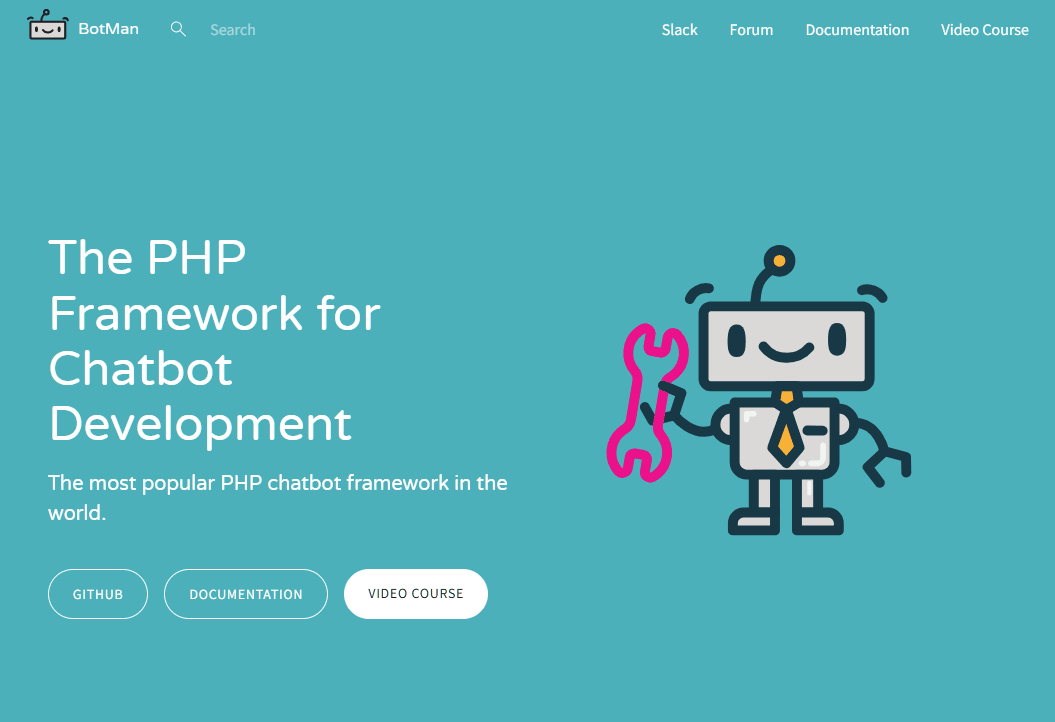
BotMan is a PHP chatbot framework that fits naturally into existing Laravel and PHP projects. Instead of adding a separate platform, you build the chatbot directly inside your codebase.
The approach is code-first and refreshingly simple. You define what the bot "hears" using pattern matching, then script conversations with ask-and-respond logic.
Out of the box it's pure keyword matching, though you can wire in an NLU service if you want it to understand more.
Key features of BotMan:
- Lives in your codebase: No external platform, no separate hosting bill, just a library in your PHP project.
- Wide channel coverage: Slack, Telegram, Facebook Messenger, Microsoft Bot Framework, and a web driver are all supported.
- MIT licensed: Around 6,200 GitHub stars and genuinely free to use however you like.
Limitations:
- Not a beginner-friendly platform
Pricing
There's no pricing to discuss here: BotMan is free and open source, and you host it yourself.
Final Thoughts
The best free rule-based chatbot isn't a single tool, it's the one that matches how you work.
Here's my closing advice: Pick a tool that fits your channel and your comfort level with code. Build a single, focused flow and put it in front of real visitors this week.
You'll learn more from one live conversation than from another hour of comparison. The script is yours to write, so start writing it.
Keep reading
- How To Deal with Angry Customers in 2026 (Scripts and Real Examples)Learn how to handle angry customers with proven de-escalation steps, calm response scripts, and practical ways to resolve complaints.
- 10 Best DocsBot Alternatives and Competitors (2026 Guide)
- 8 Best Free AI Chatbots for Websites in 2026Compare 8 free AI chatbots for websites by free plan limits, AI features, setup and upgrade cost, and find the right free chatbot for your site.
Put this into practice
HelpJet learns your docs and takes the repetitive questions off your plate. Set up in about 5 minutes.
Try HelpJet freeShare this article